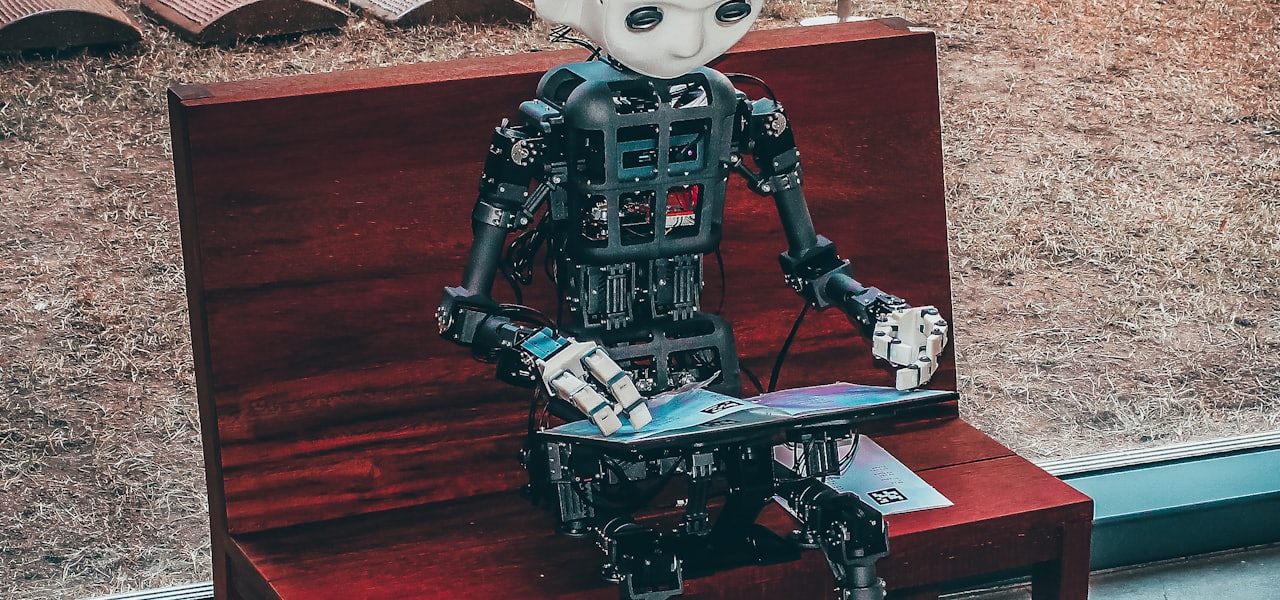
AI Aesthetics Visual Grammar

AI Aesthetics Visual Grammar — independent reviews, comparisons, pricing and step-by-step guides on Aizhi.

  • Quantum machine learning

    Quantum machine learning

    Quantum machine learning (QML) is the study of quantum algorithms for machine learning. It often refers to quantum algorithms for machine learning tasks which analyze classical data, sometimes called quantum-enhanced machine learning. QML algorithms use qubits and quantum operations to try to improve the space and time complexity of classical machine learning algorithms. Hybrid QML methods involve both classical and quantum processing, where computationally difficult subroutines are outsourced to a quantum device. These routines can be more complex in nature and executed faster on a quantum computer. Furthermore, quantum algorithms can be used to analyze quantum states instead of classical data. The term "quantum machine learning" is sometimes used to refer classical machine learning methods applied to data generated from quantum experiments (i.e. machine learning of quantum systems), such as learning the phase transitions of a quantum system or creating new quantum experiments. QML also extends to a branch of research that explores methodological and structural similarities between certain physical systems and learning systems, in particular neural networks. For example, some mathematical and numerical techniques from quantum physics are applicable to classical deep learning and vice versa. Furthermore, researchers investigate more abstract notions of learning theory with respect to quantum information, sometimes referred to as "quantum learning theory". == Machine learning with quantum computers == Quantum-enhanced machine learning refers to quantum algorithms that solve tasks in machine learning, thereby improving and often expediting classical machine learning techniques. Such algorithms typically require one to encode the given classical data set into a quantum computer to make it accessible for quantum information processing. Subsequently, quantum information processing routines are applied and the result of the quantum computation is read out by measuring the quantum system. For example, the outcome of the measurement of a qubit reveals the result of a binary classification task. While many proposals of QML algorithms are still purely theoretical and require a full-scale universal quantum computer to be tested, others have been implemented on small-scale or special purpose quantum devices. === Quantum associative memories and quantum pattern recognition === Early work on quantum associative memories has been done by Dan Ventura and Tony Martinez and by Carlo A. Trugenberger in the late 1990s and early 2000s. Associative (or content-addressable) memories are able to recognize stored content on the basis of a similarity measure, while random access memories are accessed by the address of stored information and not its content. As such they must be able to retrieve both incomplete and corrupted patterns, the essential machine learning task of pattern recognition. Typical classical associative memories store p patterns in the O ( n 2 ) {\displaystyle O(n^{2})} interactions (synapses) of a real, symmetric energy matrix over a network of n artificial neurons. The encoding is such that the desired patterns are local minima of the energy functional and retrieval is done by minimizing the total energy, starting from an initial configuration. Unfortunately, classical associative memories are severely limited by the phenomenon of cross-talk. When too many patterns are stored, spurious memories appear which quickly proliferate, so that the energy landscape becomes disordered and no retrieval is anymore possible. The number of storable patterns is typically limited by a linear function of the number of neurons, p ≤ O ( n ) {\displaystyle p\leq O(n)} . Quantum associative memories (in their simplest realization) store patterns in a unitary matrix U acting on the Hilbert space of n qubits. Retrieval is realized by the unitary evolution of a fixed initial state to a quantum superposition of the desired patterns with probability distribution peaked on the most similar pattern to an input. By its very quantum nature, the retrieval process is thus probabilistic. Because quantum associative memories are free from cross-talk, however, spurious memories are never generated. Correspondingly, they have a superior capacity than classical ones. The number of parameters in the unitary matrix U is O ( p n ) {\displaystyle O(pn)} . One can thus have efficient, spurious-memory-free quantum associative memories for any polynomial number of patterns. If the matrix U is encoded as a unique operator (as opposed as to a sequence of gates as in the circuit model), e.g. by an optical interferometer, the retrieval becomes efficient even for an exponential number of patterns. === Linear algebra simulation with quantum amplitudes === A number of quantum algorithms for machine learning are based on the idea of amplitude encoding, that is, to associate the amplitudes of a quantum state with the inputs and outputs of computations. Since a state of n {\displaystyle n} qubits is described by 2 n {\displaystyle 2^{n}} complex amplitudes, this information encoding can allow for an exponentially compact representation. Intuitively, this corresponds to associating a discrete probability distribution over binary random variables with a classical vector. The goal of algorithms based on amplitude encoding is to formulate quantum algorithms whose resources grow polynomially in the number of qubits n {\displaystyle n} , which amounts to a logarithmic time complexity in the number of amplitudes and thereby the dimension of the input. Many QML algorithms in this category are based on variations of the quantum algorithm for linear systems of equations (colloquially called HHL, after the paper's authors) which, under specific conditions, performs a matrix inversion using an amount of physical resources growing only logarithmically in the dimensions of the matrix. One of these conditions is that a Hamiltonian which entry-wise corresponds to the matrix can be simulated efficiently, which is known to be possible if the matrix is sparse or low rank. For reference, any known classical algorithm for matrix inversion requires a number of operations that grows more than quadratically in the dimension of the matrix (e.g. O ( n 2.373 ) {\displaystyle O{\mathord {\left(n^{2.373}\right)}}} ), but they are not restricted to sparse matrices. Quantum matrix inversion can be applied to machine learning methods in which the training reduces to solving a linear system of equations, for example in least-squares linear regression, the least-squares version of support vector machines, and Gaussian processes. A crucial bottleneck of methods that simulate linear algebra computations with the amplitudes of quantum states is state preparation, which often requires one to initialise a quantum system in a state whose amplitudes reflect the features of the entire dataset. Although efficient methods for state preparation are known for specific cases, this step easily hides the complexity of the task. === Variational quantum algorithms (VQAs) === In a variational quantum algorithm, a classical computer optimizes the parameters used to prepare a quantum state, while a quantum computer is used to do the actual state preparation and measurement. VQAs are considered promising candidates for noisy intermediate-scale quantum computers. Variational quantum circuits (or parameterized quantum circuits) are a popular class of VQAs where the parameters are those used in a fixed quantum circuit. Researchers have studied VQCs to solve optimization problems and find the ground state energy of complex quantum systems, which were difficult to solve using a classical computer. === Quantum binary classifier === Pattern reorganization is one of the important tasks of machine learning, binary classification is one of the tools or algorithms to find patterns. Binary classification is used in supervised learning and in unsupervised learning. In QML, classical bits are converted to qubits and they are mapped to Hilbert space; complex value data are used in a quantum binary classifier to use the advantage of Hilbert space. By exploiting the quantum mechanic properties such as superposition, entanglement, interference the quantum binary classifier produces the accurate result in short period of time. === Quantum machine learning algorithms based on Grover search === Another approach to improving classical machine learning with quantum information processing uses amplitude amplification methods based on Grover's search algorithm, which has been shown to solve unstructured search problems with a quadratic speedup compared to classical algorithms. These quantum routines can be employed for learning algorithms that translate into an unstructured search task, as can be done, for instance, in the case of the k-medians and the k-nearest neighbors algorithms. Other applications include quadratic speedups in the training of perceptrons. An e

    Read more →
  • CodeCheck

    CodeCheck

    CodeCheck is a mobile app that provides consumers with information about the ingredients in cosmetic products, as well as the ingredients and nutritional values of food. Users can access this information by scanning the product’s barcode with a smartphone or by using a text-based search. The app is available for iOS and Android devices in Germany, Austria, Switzerland, the United Kingdom, the United States, and the Netherlands. == History == CodeCheck was founded in 2010 as an association, online database, and app by Roman Bleichenbacher, who was then a student in Zurich. A website of the same name had already been launched in 2002, where users could enter information about ingredients, nutritional values, and manufacturers of products. The first round of financing took place in July 2014 and raised over 1.1 million Swiss francs, which coincided with the founding of CodeCheck AG. Investors included Doodle founders Myke Näf and Paul E. Sevinç. The company subsequently expanded to Austria and Germany. In the same year, Boris Manhart became CEO. CodeCheck GmbH was established in Berlin in 2016. The app became available in the United States in 2017 and in the United Kingdom in November 2019. In 2020, it was also launched in the Netherlands. Following insolvency proceedings, the app has been owned by Producto Check GmbH since 2022. == Functions == The app can be used to scan the barcode of food and cosmetic products. It then displays information about ingredients, nutritional values, manufacturers and certification labels. For many years, users were able to enter and edit product information themselves and indicate advantages and disadvantages of individual products. Since 2020, the app has placed greater emphasis on machine text recognition. The collected data is combined with substance ratings using an algorithm. These ratings are based on scientific studies and expert assessments, including those from the Consumer Advice Centre in Hamburg, Greenpeace, the WWF and the German Association for the Environment and Nature Conservation (BUND e. V.), and cannot be modified by users or manufacturers. The app also provides information on the sugar and fat content of food products. In addition, it indicates whether a product contains hormone-active substances, microplastics, palm oil, animal-derived ingredients, lactose or gluten. Since 2020, the app has displayed a climate score for food products in cooperation with the Eaternity Institute. == Financing == CodeCheck is primarily financed through native advertising and banner ads. Since 2018, the company has also offered analysis services and survey tools directly to fast-moving consumer goods (FMCG) manufacturers. In addition, access to the API is available, enabling other companies to use the product database. With the introduction of a subscription model in 2019, the CodeCheck app can be used ad-free and in offline mode. Since 2021, CodeCheck has also offered its own “Green Label” certification for manufacturers. Products are certified if at least 90 percent of their ingredients are classified as harmless. == Awards == In May 2015, the app topped the download charts for the first time, reaching 2.3 million installations. By September 2019, the app had once again reached the top of the German app charts, surpassing five million downloads.

    Read more →
  • Projection-slice theorem

    Projection-slice theorem

    In mathematics, the projection-slice theorem, central slice theorem or Fourier slice theorem in two dimensions states that the results of the following two calculations are equal: Take a two-dimensional function f(r), project (e.g. using the Radon transform) it onto a (one-dimensional) line, and do a Fourier transform of that projection. Take that same function, but do a two-dimensional Fourier transform first, and then slice the function through its origin, parallel to the projection line. In operator terms, if F1 and F2 are the 1- and 2-dimensional Fourier transform operators mentioned above, P1 is the projection operator (which projects a 2-D function onto a 1-D line), S1 is a slice operator (which extracts a 1-D central slice from a function), then F 1 P 1 = S 1 F 2 . {\displaystyle F_{1}P_{1}=S_{1}F_{2}.} This idea can be extended to higher dimensions. This theorem is used, for example, in the analysis of medical CT scans where a "projection" is an x-ray image of an internal organ. The Fourier transforms of these images are seen to be slices through the Fourier transform of the 3-dimensional density of the internal organ, and these slices can be interpolated to build up a complete Fourier transform of that density. The inverse Fourier transform is then used to recover the 3-dimensional density of the object. This technique was first derived by Ronald N. Bracewell in 1956 for a radio-astronomy problem. == The projection-slice theorem in N dimensions == In N dimensions, the projection-slice theorem states that the Fourier transform of the projection of an N-dimensional function f(r) onto an m-dimensional linear submanifold is equal to an m-dimensional slice of the N-dimensional Fourier transform of that function consisting of an m-dimensional linear submanifold through the origin in the Fourier space which is parallel to the projection submanifold. In operator terms: F m P m = S m F N . {\displaystyle F_{m}P_{m}=S_{m}F_{N}.\,} == The generalized Fourier-slice theorem == In addition to generalizing to N dimensions, the projection-slice theorem can be further generalized with an arbitrary change of basis. For convenience of notation, we consider the change of basis to be represented as B, an N-by-N invertible matrix operating on N-dimensional column vectors. Then the generalized Fourier-slice theorem can be stated as F m P m B = S m B − T | B − T | F N {\displaystyle F_{m}P_{m}B=S_{m}{\frac {B^{-T}}{|B^{-T}|}}F_{N}} where B − T = ( B − 1 ) T {\displaystyle B^{-T}=(B^{-1})^{T}} is the transpose of the inverse of the change of basis transform. == Proof in two dimensions == The projection-slice theorem is easily proven for the case of two dimensions. Without loss of generality, we can take the projection line to be the x-axis. There is no loss of generality because if we use a shifted and rotated line, the law still applies. Using a shifted line (in y) gives the same projection and therefore the same 1D Fourier transform results. The rotated function is the Fourier pair of the rotated Fourier transform, for which the theorem again holds. If f(x, y) is a two-dimensional function, then the projection of f(x, y) onto the x axis is p(x) where p ( x ) = ∫ − ∞ ∞ f ( x , y ) d y . {\displaystyle p(x)=\int _{-\infty }^{\infty }f(x,y)\,dy.} The Fourier transform of f ( x , y ) {\displaystyle f(x,y)} is F ( k x , k y ) = ∫ − ∞ ∞ ∫ − ∞ ∞ f ( x , y ) e − 2 π i ( x k x + y k y ) d x d y . {\displaystyle F(k_{x},k_{y})=\int _{-\infty }^{\infty }\int _{-\infty }^{\infty }f(x,y)\,e^{-2\pi i(xk_{x}+yk_{y})}\,dxdy.} The slice is then s ( k x ) {\displaystyle s(k_{x})} s ( k x ) = F ( k x , 0 ) = ∫ − ∞ ∞ ∫ − ∞ ∞ f ( x , y ) e − 2 π i x k x d x d y {\displaystyle s(k_{x})=F(k_{x},0)=\int _{-\infty }^{\infty }\int _{-\infty }^{\infty }f(x,y)\,e^{-2\pi ixk_{x}}\,dxdy} = ∫ − ∞ ∞ [ ∫ − ∞ ∞ f ( x , y ) d y ] e − 2 π i x k x d x {\displaystyle =\int _{-\infty }^{\infty }\left[\int _{-\infty }^{\infty }f(x,y)\,dy\right]\,e^{-2\pi ixk_{x}}dx} = ∫ − ∞ ∞ p ( x ) e − 2 π i x k x d x {\displaystyle =\int _{-\infty }^{\infty }p(x)\,e^{-2\pi ixk_{x}}dx} which is just the Fourier transform of p(x). The proof for higher dimensions is easily generalized from the above example. == The FHA cycle == If the two-dimensional function f(r) is circularly symmetric, it may be represented as f(r), where r = |r|. In this case the projection onto any projection line will be the Abel transform of f(r). The two-dimensional Fourier transform of f(r) will be a circularly symmetric function given by the zeroth-order Hankel transform of f(r), which will therefore also represent any slice through the origin. The projection-slice theorem then states that the Fourier transform of the projection equals the slice or F 1 A 1 = H , {\displaystyle F_{1}A_{1}=H,} where A1 represents the Abel-transform operator, projecting a two-dimensional circularly symmetric function onto a one-dimensional line, F1 represents the 1-D Fourier-transform operator, and H represents the zeroth-order Hankel-transform operator. == Extension to fan beam or cone-beam CT == The projection-slice theorem is suitable for CT image reconstruction with parallel beam projections. It does not directly apply to fanbeam or conebeam CT. The theorem was extended to fan-beam and conebeam CT image reconstruction by Shuang-ren Zhao in 1995.

    Read more →
  • Oculus Quill

    Oculus Quill

    Quill is a painting and animation software for virtual reality. It runs on Microsoft Windows with Oculus Rift headsets. It is used to create 3D paintings and animated cartoons. Quill was released on November 29, 2016, on the Oculus Store. Theater Elsewhere(formerly Quill Theater), an application for viewing creations made in Quill, was later made available following the release of the Oculus Quest. In September 2021, Facebook, now known as Meta Platforms, and the owner of Oculus, sold Quill to its original creator, who continues to develop and support the app. == Development == Quill was originally developed by Oculus Story Studio as an internal tool for the creative needs of the studio's project Dear Angelica directed by Saschka Unseld along with its art-director Wesley Allsbrook. == Controls == The software works on Oculus Rift utilizing its 6DoF motion controllers. Users can paint in 3D space using their hands naturally, and animate those paintings with keyframes. They can also capture videos and photos of their creations. == Reception == Dear Angelica, a VR story fully painted in Quill, was nominated for an Emmy Award in 2017.

    Read more →
  • Manual override

    Manual override

    A manual override (MO) or manual analog override (MAO) is a mechanism where control is taken from an automated system and given to the user. For example, a manual override in photography refers to the ability for the human photographer to turn off the automatic aperture sizing, automatic focusing, or any other automated system on the camera. Some manual overrides can be used to veto an automated system's judgment when the system is in error. An example of this is a printer's ink level detection: in one case, a researcher found that when he overrode the system, up to 38% more pages could be printed at good quality by the printer than the automated system would have allowed. Automated systems are becoming increasingly common and integrated into everyday objects such as automobiles and domestic appliances. This development of ubiquitous computing raises general issues of policy and law about the need for manual overrides for matters of great importance such as life-threatening situations and major economic decisions. The loyalty of such autonomous devices then becomes an issue. If they follow rules installed by the manufacturer or required by law and refuse to cede control in some situations then the owners of the devices may feel disempowered, alienated and lacking true ownership. == Major incidents == China Airlines Flight 140 crashed, causing many deaths, due to a misunderstanding about the manual overrides for the autopilot. The Take-Off/Go Around system had been activated to abort a landing. It was programmed to ignore manual controls in this situation but the human pilots tried to continue the landing. The conflicting control signals from the pilots and autopilot then resulted in the aircraft stalling and crashing. The autopilot for this aircraft type was then reprogrammed so that it would never ignore a manual override.

    Read more →
  • Audio mining

    Audio mining

    Audio mining is a technique by which the content of an audio signal can be automatically analyzed and searched. It is most commonly used in the field of automatic speech recognition, where the analysis tries to identify any speech within the audio. The term audio mining is sometimes used interchangeably with audio indexing, phonetic searching, phonetic indexing, speech indexing, audio analytics, speech analytics, word spotting, and information retrieval. Audio indexing, however, is mostly used to describe the pre-process of audio mining, in which the audio file is broken down into a searchable index of words. == History == Academic research on audio mining began in the late 1970s in schools like Carnegie Mellon University, Columbia University, the Georgia Institute of Technology, and the University of Texas. Audio data indexing and retrieval began to receive attention and demand in the early 1990s, when multimedia content started to develop and the volume of audio content significantly increased. Before audio mining became the mainstream method, written transcripts of audio content were created and manually analyzed. == Process == Audio mining is typically split into four components: audio indexing, speech processing and recognition systems, feature extraction and audio classification. The audio will typically be processed by a speech recognition system in order to identify word or phoneme units that are likely to occur in the spoken content. This information may either be used immediately in pre-defined searches for keywords or phrases (a real-time "word spotting" system), or the output of the speech recognizer may be stored in an index file. One or more audio mining index files can then be loaded at a later date in order to run searches for keywords or phrases. The results of a search will normally be in terms of hits, which are regions within files that are good matches for the chosen keywords. The user may then be able to listen to the audio corresponding to these hits in order to verify if a correct match was found. === Audio Indexing === In audio, there is the main problem of information retrieval - there is a need to locate the text documents that contain the search key. Unlike humans, a computer is not able to distinguish between the different types of audios such as speed, mood, noise, music or human speech - an effective searching method is needed. Hence, audio indexing allows efficient search for information by analyzing an entire file using speech recognition. An index of content is then produced, bearing words and their locations done through content-based audio retrieval, focusing on extracted audio features. It is done through mainly two methods: Large Vocabulary Continuous Speech Recognition (LVCSR) and Phonetic-based Indexing. ==== Large Vocabulary Continuous Speech Recognizers (LVCSR) ==== In text-based indexing or large vocabulary continuous speech recognition (LVCSR), the audio file is first broken down into recognizable phonemes. It is then run through a dictionary that can contain several hundred thousand entries and matched with words and phrases to produce a full text transcript. A user can then simply search a desired word term and the relevant portion of the audio content will be returned. If the text or word could not be found in the dictionary, the system will choose the next most similar entry it can find. The system uses a language understanding model to create a confidence level for its matches. If the confidence level be below 100 percent, the system will provide options of all the found matches. ===== Advantages and disadvantages ===== The main draw of LVCSR is its high accuracy and high searching speed. In LVCSR, statistical methods are used to predict the likelihood of different word sequences, hence the accuracy is much higher than the single word lookup of a phonetic search. If the word can be found, the probability of the word spoken is very high. Meanwhile, while initial processing of audio takes a fair bit of time, searching is quick as just a simple test to text matching is needed. On the other hand, LVCSR is susceptible to common issues of speech recognition. The inherent random nature of audio and problems of external noise all affect the accuracies of text-based indexing. Another problem with LVCSR is its over reliance on its dictionary database. LVCSR only recognizes words that are found in their dictionary databases, and these dictionaries and databases are unable to keep up with the constant evolving of new terminology, names and words. Should the dictionary not contain a word, there is no way for the system to identify or predict it. This reduces the accuracy and reliability of the system. This is named the Out-of-vocabulary (OOV) problem. Audio mining systems try to cope with OOV by continuously updating the dictionary and language model used, but the problem still remains significant and has probed a search for alternatives. Additionally, due to the need to constantly update and maintain task-based knowledge and large training databases to cope with the OOV problem, high computational costs are incurred. This makes LVCSR an expensive approach to audio mining. ==== Phonetic-based Indexing ==== Phonetic-based indexing also breaks the audio file into recognizable phonemes, but instead of converting them to a text index, they are kept as they are and analyzed to create a phonetic-based index. The process of phonetic-based indexing can be split into two phases. The first phase is indexing. It begins by converting the input media into a standard audio representation format (PCM). Then, an acoustic model is applied to the speech. This acoustic model represents characteristics of both an acoustic channel (an environment in which the speech was uttered and a transducer through which it was recorded) and a natural language (in which human beings expressed the input speech). This produces a corresponding phonetic search track, or phonetic audio track (PAT), a highly compressed representation of the phonetic content of the input media. The second phase is searching. The user's search query term is parsed into a possible phoneme string using a phonetic dictionary. Then, multiple PAT files can be scanned at high speed during a single search for likely phonetic sequences that closely match corresponding strings of phonemes in the query term. ===== Advantages and disadvantages ===== Phonetic indexing is most attractive as it is largely unaffected by linguistic issues such as unrecognized words and spelling errors. Phonetic preprocessing maintains an open vocabulary that does not require updating. That makes it particularly useful for searching specialized terminology or words in foreign languages that do not commonly appear in dictionaries. It is also more effective for searching audio files with disruptive background noise and/or unclear utterances as it can compile results based on the sounds it can discern, and should the user wish to, they can search through the options until they find the desired item. Furthermore, in contrast to LVCSR, it can process audio files very quickly as there are very few unique phonemes between languages. However, phonemes cannot be effectively indexed like an entire word, thus searching on a phonetic-based system is slow. An issue with phonetic indexing is its low accuracy. Phoneme-based searches result in more false matches than text-based indexing. This is especially prevalent for short search terms, which have a stronger likelihood of sounding similar to other words or being part of bigger words. It could also return irrelevant results from other languages. Unless the system recognizes exactly the entire word, or understands phonetic sequences of languages, it is difficult for phonetic-based indexing to return accurate findings. === Speech processing and recognition system === Deemed as the most critical and complex component of audio mining, speech recognition requires the knowledge of human speech production system and its modeling. To correspond the Human speech production system, the electrical speech production system is developed to consist of: Speech generation Speech perception Voiced & unvoiced speech Model of human speech The electrical speech production system converts acoustic signal into corresponding representation of the spoken through the acoustic models in their software where all phonemes are represented. A statistical language model aids in the process by identifying how likely words are to follow each other in certain languages. Put together with a complex probability analysis, the speech recognition system is capable of taking an unknown speech signal and transcribing it into words based on the program's dictionary. ASR (automatic speech recognition) system includes: Acoustic analysis: input sound waveform is transformed into a feature Acoustic model: establishes relationship between speech signal and phonemes, pronunciation model and lang

    Read more →
  • Color picker

    Color picker

    A color picker (also color chooser or color tool) is a graphical user interface widget, usually found within graphics software or online, used to select colors and, in some cases, to create color schemes (the color picker might be more sophisticated than the palette included with the program). Operating systems such as Microsoft Windows or macOS have a system color picker, which can be used by third-party programs (e.g., Adobe Photoshop). == History == The concept of color pickers dates back to the early days of computer graphics and digital design. Early versions were rudimentary, often featuring basic color palettes and limited functionality. One of the first drawing programs to include a color picker was SketchPad (also referred to as LisaSketch), designed by Bill Atkinson in 1983 to showcase LisaGraf's capabilities. It used a black and white pattern system, using dithering to create the illusion of color depth. With the increased popularity of personal computers with color graphics, there soon came software similar to SketchPad that supported more than two colors, like Broderbund's Dazzle Draw for the Apple II or Electronic Arts' Deluxe Paint. However, the color pickers present in those programs relied on indexed colors. Color pickers, resembling ones used in modern software with support for direct, 24-bit color, appeared soon after the release of the Macintosh II, with the release of programs like Adobe Photoshop and Corel Painter. As the increase of color depth allowed the choice of significantly more colors, the shape and form of color pickers started to diverge. For example, Adobe Photoshop used a hue-saturation color wheel with a slider for brightness in version 0.63, later on switching to a rectangular design accompanied by a hue slider. Corel Painter pioneered the triangular saturation and brightness picker with a hue ring around it, aiming to better represent the continuity of the hue spectrum and the relationship between saturation and brightness. == Purpose == A color picker is used to select and adjust color values. In graphic design and image editing, users typically choose colors via an interface with a visual representation of a color—organized with quasi-perceptually-relevant hue, saturation and lightness dimensions (HSL) – instead of keying in alphanumeric text values. Because color appearance depends on comparison of neighboring colors (see color vision), many interfaces attempt to clarify the relationships between colors. == Interface == Color tools can vary in their interface. Some may use sliders, buttons, text boxes for color values, or direct manipulation. Often a two-dimensional square is used to create a range of color values (such as lightness and saturation) that can be clicked on or selected in some other manner. Drag and drop, color droppers, and various other forms of interfaces are commonly used as well. Usually, color values are also displayed numerically, so they can be precisely remembered and keyed-in later, such as three values of 0-255 representing red, green, and blue, respectively. === Eyedropper === The eyedropper is a tool present in most color pickers and graphics software that allows a user to read a color at a specific point in an image, or position on a display. This enables the color to be transferred to other applications particularly quickly. Modern implementations of eyedropper tools are also available as browser extensions, allowing users to pick colors directly from web pages, such as in Google Chrome and Microsoft Edge. == Working == A color picker has two main parts, first a color slider and second a color canvas. The color slider has a linear or radial gradient of the seven rainbow colors i.e. Violet, Indigo, Blue, Green, Yellow, Orange and Red. It allows one to choose any of the seven primary colors. The color value chosen from the color slider instantly reflects in the color canvas. The color canvas is a mixture of two linear color gradients. First a linear gradient of the current chosen color and second a linear gradient of the black color. This mixture of color gradients lets one choose a lighter and darker version of the current chosen color from the color slider.

    Read more →
  • Shape analysis (digital geometry)

    Shape analysis (digital geometry)

    This article describes shape analysis to analyze and process geometric shapes. == Description == Shape analysis is the (mostly) automatic analysis of geometric shapes, for example using a computer to detect similarly shaped objects in a database or parts that fit together. For a computer to automatically analyze and process geometric shapes, the objects have to be represented in a digital form. Most commonly a boundary representation is used to describe the object with its boundary (usually the outer shell, see also 3D model). However, other volume based representations (e.g. constructive solid geometry) or point based representations (point clouds) can be used to represent shape. Once the objects are given, either by modeling (computer-aided design), by scanning (3D scanner) or by extracting shape from 2D or 3D images, they have to be simplified before a comparison can be achieved. The simplified representation is often called a shape descriptor (or fingerprint, signature). These simplified representations try to carry most of the important information, while being easier to handle, to store and to compare than the shapes directly. A complete shape descriptor is a representation that can be used to completely reconstruct the original object (for example the medial axis transform). == Application fields == Shape analysis is used in many application fields: archeology for example, to find similar objects or missing parts architecture for example, to identify objects that spatially fit into a specific space medical imaging to understand shape changes related to illness or aid surgical planning virtual environments or on the 3D model market to identify objects for copyright purposes security applications such as face recognition entertainment industry (movies, games) to construct and process geometric models or animations computer-aided design and computer-aided manufacturing to process and to compare designs of mechanical parts or design objects. == Shape descriptors == Shape descriptors can be classified by their invariance with respect to the transformations allowed in the associated shape definition. Many descriptors are invariant with respect to congruency, meaning that congruent shapes (shapes that could be translated, rotated and mirrored) will have the same descriptor (for example moment or spherical harmonic based descriptors or Procrustes analysis operating on point clouds). Another class of shape descriptors (called intrinsic shape descriptors) is invariant with respect to isometry. These descriptors do not change with different isometric embeddings of the shape. Their advantage is that they can be applied nicely to deformable objects (e.g. a person in different body postures) as these deformations do not involve much stretching but are in fact near-isometric. Such descriptors are commonly based on geodesic distances measures along the surface of an object or on other isometry invariant characteristics such as the Laplace–Beltrami spectrum (see also spectral shape analysis). There are other shape descriptors, such as graph-based descriptors like the medial axis or the Reeb graph that capture geometric and/or topological information and simplify the shape representation but can not be as easily compared as descriptors that represent shape as a vector of numbers. From this discussion it becomes clear, that different shape descriptors target different aspects of shape and can be used for a specific application. Therefore, depending on the application, it is necessary to analyze how well a descriptor captures the features of interest.

    Read more →
  • Mentimeter

    Mentimeter

    Mentimeter (or Menti for short) is a Swedish company based in Stockholm that develops and maintains an eponymous app used to create presentations with real-time feedback. == Foundation and background == Based in Stockholm, Sweden, the Mentimeter app was started by Swedish entrepreneur Johnny Warström and Niklas Ingvar as a response to unproductive meetings. The initial start-up budget was $500,000 raised by a group of prominent investors, including Per Appelgren in 2014, following the market's tendency to invest in Scandinavia. The app also focuses on online collaboration for the education sector, allowing students or public members to answer questions anonymously. The app enables users to share knowledge and real-time feedback on mobile devices with presentations, polls or brainstorming sessions in classes, meetings, gatherings, conferences and other group activities. == Achievements == By 2021, Mentimeter had over 270 million users and was one of Sweden's fastest-growing startups. The company also ranked #10 on 20 Fastest Growing 500 Startups Batch 16 Companies. It was ranked Stockholm's fastest growing company of the 2018 edition of the DI Gasell Award. Mentimeter has a freemium business model.

    Read more →
  • List of computer graphics journals

    List of computer graphics journals

    List of computer graphics journals includes notable peer-reviewed scientific and academic journals that focus on computer graphics, visualization, and related areas such as rendering, animation, image processing, and geometric modeling. == Journals == ACM Transactions on Graphics Computers & Graphics IEEE Computer Graphics and Applications IEEE Transactions on Computer-Aided Design of Integrated Circuits and Systems Graphical Models Journal of Computer Graphics Techniques Presence: Teleoperators and Virtual Environments Virtual Reality Simulation & Gaming

    Read more →
  • Time-compressed speech

    Time-compressed speech

    Time-compressed speech refers to an audio recording of verbal text in which the text is presented in a much shorter time interval than it would through normally-paced real time speech. The basic purpose is to make recorded speech contain more words in a given time, yet still be understandable. For example: a paragraph that might normally be expected to take 20 seconds to read, might instead be presented in 15 seconds, which would represent a time-compression of 25% (5 seconds out of 20). The term "time-compressed speech" should not be confused with "speech compression", which controls the volume range of a sound, but does not alter its time envelope. == Methods == While some voice talents are capable of speaking at rates significantly in excess of general norms, the term "time-compressed speech" most usually refers to examples in which the time-reduction has been accomplished through some form of electronic processing of the recorded speech. In general, recorded speech can be electronically time-compressed by: increasing its speed (linear compression); removing silences (selective editing); a combination of the two (non-linear compression). The speed of a recording can be increased, which will cause the material to be presented at a faster rate (and hence in a shorter amount of time), but this has the undesirable side-effect of increasing the frequency of the whole passage, raising the pitch of the voices, which can reduce intelligibility. There are normally silences between words and sentences, and even small silences within certain words, both of which can be reduced or removed ("edited-out") which will also reduce the amount of time occupied by the full speech recording. However, this can also have the effect of removing verbal "punctuation" from the speech, causing words and sentences to run together unnaturally, again reducing intelligibility. Vowels are typically held a minimum of 20 milliseconds, over many cycles of the fundamental pitch. DSP systems can detect the beginning and end of each cycle and then skip over some fraction of those cycles, causing the material to be presented at a faster rate, without changing the pitch, maintaining a "normal" tone of voice. The current preferred method of time-compression is called "non-linear compression", which employs a combination of selectively removing silences; speeding up the speech to make the reduced silences sound normally-proportioned to the text; and finally applying various data algorithms to bring the speech back down to the proper pitch. This produces a more acceptable result than either of the two earlier techniques; however, if unrestrained, removing the silences and increasing the speed can make a selection of speech sound more insistent, possibly to the point of unpleasantness. == Applications == === Advertising === Time-compressed speech is frequently used in television and radio advertising. The advantage of time-compressed speech is that the same number of words can be compressed into a smaller amount of time, reducing advertising costs, and/or allowing more information to be included in a given radio or TV advertisement. It is usually most noticeable in the information-dense caveats and disclaimers presented (usually by legal requirement) at the end of commercials—the aural equivalent of the "fine print" in a printed contract. This practice, however, is not new: before electronic methods were developed, spokespeople who could talk extremely quickly and still be understood were widely used as voice talents for radio and TV advertisements, and especially for recording such disclaimers. === Education === Time-compressed speech has educational applications such as increasing the information density of trainings, and as a study aid. A number of studies have demonstrated that the average person is capable of relatively easily comprehending speech delivered at higher-than-normal rates, with the peak occurring at around 25% compression (that is, 25% faster than normal); this facility has been demonstrated in several languages. Conversational speech (in English) takes place at a rate of around 150 wpm (words per minute), but the average person is able to comprehend speech presented at rates of up to 200-250 wpm without undue difficulty. Blind and severely visually impaired subjects scored similar comprehension levels at even higher rates, up to 300-350 wpm. Blind people have been found to use time-compressed speech extensively, for example, when reviewing recorded lectures from high school and college classes, or professional trainings. Comprehension rates in older blind subjects have been found to be as good, or in some cases better than those found in younger sighted subjects. Other studies have determined that the ability to comprehend highly time-compressed speech tends to fall off with increased age, and is also reduced when the language of the time-compressed speech is not the listener's native language. Non-native speakers can, however, improve their comprehension level of time-compressed speech with multiday training. === Voice Mail === Voice mail systems have employed time-compressed speech since as far back as the 1970s. In this application, the technology enables the rapid review of messages in high-traffic systems, by a relatively small number of people. === Streaming Multimedia === Time-compressed speech has been explored as one of a variety of interrelated factors which may be manipulated to increase the efficiency of streaming multimedia presentations, by significantly reducing the latency times involved in the transfer of large digitally encoded media files.

    Read more →
  • Direct voice input

    Direct voice input

    Direct voice input (DVI), sometimes called voice input control (VIC), is a style of human–machine interaction "HMI" in which the user makes voice commands to issue instructions to the machine through speech recognition. In the field of military aviation, DVI has been introduced into the cockpits of several modern military aircraft, such as the Eurofighter Typhoon, the Lockheed Martin F-35 Lightning II, the Dassault Rafale, the KF-21 Boramae and the Saab JAS 39 Gripen. Such systems have also been used for various other purposes, including industry control systems and speech recognition assistance for impaired individuals. == Overview == DVI systems can be divided into two major categories of functionality: "user-dependent" or "user-independent". A user-dependent system requires that a personal voice template to be generated for a specific person; the template for this individual has to be loaded onto their assigned machine prior to use of the DVI system for it to function properly. In contrast, a user-independent system does not require any personal voice template, being intended to respond correctly to the voice of any user. They can also be categorised between "discrete recognition" and "continuous recognition". Users of a discrete recognition system must pause between each word so that the DVI system can identify the separations between each word, while a continuous speech recognition system is capable of understanding a normal rate of speech. During the mid-2000s, researchers at the National Aerospace Laboratory in the Netherlands examined the use of DVI in the "GRACE" simulator; a total of twelve pilots participated in the ensuing experiment. The tests performed reportedly revealed that, while the hardware itself functioned well, several improvements were desirable prior to real-world deployment on aircraft since DVI operations actually consumed more time in comparison to traditional existing methods. Recommendations for improvements included the adoption of simpler syntax, the achievement of a greater recognition rate, and a decrease in response times; all of the issues encountered were determined to be of a technological nature, and were deemed feasible to resolve. The researchers concluded that in cockpits, especially during emergencies where pilots have to operate entirely on their own, a DVI system could be highly relevant, but that it was not of crucial importance during most other conceivable scenarios. Around the same time, evaluations of DVI systems for civil aviation purposes were conducted within the framework of Project SafeSound, coordinated by the European Union. It involved the observation of pilot workloads in real-world cockpits and contrasting them against pilot activity in flight simulators using both conventional systems and DVI assistance. The project aimed to enhance aviation safety and to decrease the workload in both ground and flight operations via the application of enhanced audio functions. == Applications == === Aviation === Prior to its widespread deployment, a handful of conventional military aircraft were converted to trial DVI systems; examples include the Harrier AV-8B and F-16 VISTA. In another case, a General Dynamics F-16 Fighting Falcon simulator was modified with DVI for a voice control study that was undertaken by the Royal Netherlands Air Force. DVI trials have also been conducted on helicopters, including the Boeing AH-64 Apache, showing the potential to improve flight safety and mission effectiveness. Numerous modern fighter aircraft have been outfitted with DVI systems, often in combination with various other man-machine interface schemes, such as HOTAS-compliant controls and other advanced control technologies. The combination of Voice and HOTAS control schemes has sometimes been referred to as the "V-TAS" concept. A prominent fighter aircraft to be furnished with a V-TAS cockpit is the Eurofighter Typhoon. The Lockheed Martin F-35 Lightning II also features a DVI system, which was developed by Adacel. Other examples includes the Dassault Rafale and the Saab JAS 39 Gripen. Numerous aircraft have been planned to use DVI. At one stage, the United States Air Force had sought to integrate DVI upon the Lockheed Martin F-22 Raptor; however, the technology was eventually judged to pose too many technical risks at that point in time, and thus such efforts were abandoned. === Personal === By 1990, working prototypes of speech recognition systems were being demonstrated; these were being promoted for the purpose of providing an effective man-machine interface for individuals with impaired speech. Techniques employed included time-encoded digital speech and automatic token set selection. Investigations of these early DVI systems reportedly included the use of automatic diagnostic routines and limited-scale trials using volunteers. During the 2010s, various companies were offering voice recognition systems to the general public in the form of personal digital assistants. One example is the Google Voice service, which allows users to pose questions via a DVI package installed on either a personal computer, tablet, or mobile phone. Numerous digital assistants have been developed, such as Amazon Echo, Siri, and Cortana, that use DVI to interact with users. === Commercial === DVI technology has enabled automated telephone systems to be widely deployed. Many companies commonly use centralised phone systems that route callers to the correct department via such methods. Various car manufacturers have also furnished their road vehicles with DVI systems; these typically allow drivers to control infotainment systems and interact with mobile phones with more convenience than legacy methods. During the late 1980s, investigations into the use of DVI systems for controlling CNC machines and other manufacturing apparatus were underway. During the 2010s, such systems were being used for logistics and warehouse management purposes.

    Read more →
  • Second-order co-occurrence pointwise mutual information

    Second-order co-occurrence pointwise mutual information

    In computational linguistics, second-order co-occurrence pointwise mutual information (SOC-PMI) is a method used to measure semantic similarity, or how close in meaning two words are. The method does not require the two words to appear together in a text. Instead, it works by analyzing the "neighbor" words that typically appear alongside each of the two target words in a large body of text (corpus). If the two target words frequently share the same neighbors, they are considered semantically similar. For example, the words "cemetery" and "graveyard" may not appear in the same sentence often, but they both frequently appear near words like "buried," "dead," and "funeral." SOC-PMI uses this shared context to determine that they have a similar meaning. The method is called "second-order" because it doesn't look at the direct co-occurrence of the target words (which would be first-order), but at the co-occurrence of their neighbors (a second level of association). The strength of these associations is quantified using pointwise mutual information (PMI). == History == The method builds on earlier work like the PMI-IR algorithm, which used the AltaVista search engine to calculate word association probabilities. The key advantage of a second-order approach like SOC-PMI is its ability to measure similarity between words that do not co-occur often, or at all. The British National Corpus (BNC) has been used as a source for word frequencies and contexts for this method. == Methodology == The SOC-PMI algorithm measures the similarity between two words, w 1 {\displaystyle w_{1}} and w 2 {\displaystyle w_{2}} , in several steps. === Step 1: Score neighboring words with PMI === First, for each target word ( w 1 {\displaystyle w_{1}} and w 2 {\displaystyle w_{2}} ), the algorithm identifies its "neighbor" words within a certain text window (e.g., within 5 words to the left or right) across a large corpus. The strength of the association between a target word t i {\displaystyle t_{i}} and its neighbor w {\displaystyle w} is calculated using pointwise mutual information (PMI). A higher PMI value means the two words appear together more often than would be expected by chance. The PMI between a target word t i {\displaystyle t_{i}} and a neighbor word w {\displaystyle w} is calculated as: f pmi ( t i , w ) = log 2 ⁡ f b ( t i , w ) × m f t ( t i ) f t ( w ) {\displaystyle f^{\text{pmi}}(t_{i},w)=\log _{2}{\frac {f^{b}(t_{i},w)\times m}{f^{t}(t_{i})f^{t}(w)}}} where: f b ( t i , w ) {\displaystyle f^{b}(t_{i},w)} is the number of times t i {\displaystyle t_{i}} and w {\displaystyle w} appear together in the context window. f t ( t i ) {\displaystyle f^{t}(t_{i})} is the total number of times t i {\displaystyle t_{i}} appears in the corpus. f t ( w ) {\displaystyle f^{t}(w)} is the total number of times w {\displaystyle w} appears in the corpus. m {\displaystyle m} is the total number of tokens (words) in the corpus. === Step 2: Create a semantic 'signature' for each word === For each target word ( w 1 {\displaystyle w_{1}} and w 2 {\displaystyle w_{2}} ), the algorithm creates a list of its most significant neighbors. This is done by taking the top β {\displaystyle \beta } neighbor words, sorted in descending order by their PMI score with the target word. This list of top neighbors, X w {\displaystyle X^{w}} , acts as a semantic "signature" for the word w {\displaystyle w} . X w = { X i w } {\displaystyle X^{w}=\{X_{i}^{w}\}} , for i = 1 , 2 , … , β {\displaystyle i=1,2,\ldots ,\beta } The size of this list, β {\displaystyle \beta } , is a parameter of the method. === Step 3: Compare the signatures === The algorithm then compares the signatures of w 1 {\displaystyle w_{1}} and w 2 {\displaystyle w_{2}} . It looks for words that are present in both signatures. The similarity of w 1 {\displaystyle w_{1}} to w 2 {\displaystyle w_{2}} is calculated by summing the PMI scores of w 2 {\displaystyle w_{2}} with every word in w 1 {\displaystyle w_{1}} 's signature list. The β {\displaystyle \beta } -PMI summation function defines this score. The score for w 1 {\displaystyle w_{1}} with respect to w 2 {\displaystyle w_{2}} is: f ( w 1 , w 2 , β ) = ∑ i = 1 β ( f pmi ( X i w 1 , w 2 ) ) γ {\displaystyle f(w_{1},w_{2},\beta )=\sum _{i=1}^{\beta }(f^{\text{pmi}}(X_{i}^{w_{1}},w_{2}))^{\gamma }} This sum only includes terms where the PMI value is positive. The exponent γ {\displaystyle \gamma } (with a value > 1) is used to give more weight to neighbors that are more strongly associated with w 2 {\displaystyle w_{2}} . This calculation is done in both directions: The similarity of w 1 {\displaystyle w_{1}} with respect to w 2 {\displaystyle w_{2}} : f ( w 1 , w 2 , β 1 ) = ∑ i = 1 β 1 ( f pmi ( X i w 1 , w 2 ) ) γ {\displaystyle f(w_{1},w_{2},\beta _{1})=\sum _{i=1}^{\beta _{1}}(f^{\text{pmi}}(X_{i}^{w_{1}},w_{2}))^{\gamma }} The similarity of w 2 {\displaystyle w_{2}} with respect to w 1 {\displaystyle w_{1}} : f ( w 2 , w 1 , β 2 ) = ∑ i = 1 β 2 ( f pmi ( X i w 2 , w 1 ) ) γ {\displaystyle f(w_{2},w_{1},\beta _{2})=\sum _{i=1}^{\beta _{2}}(f^{\text{pmi}}(X_{i}^{w_{2}},w_{1}))^{\gamma }} === Step 4: Calculate final similarity score === Finally, the total semantic similarity is the average of the two scores from the previous step. S i m ( w 1 , w 2 ) = f ( w 1 , w 2 , β 1 ) β 1 + f ( w 2 , w 1 , β 2 ) β 2 {\displaystyle \mathrm {Sim} (w_{1},w_{2})={\frac {f(w_{1},w_{2},\beta _{1})}{\beta _{1}}}+{\frac {f(w_{2},w_{1},\beta _{2})}{\beta _{2}}}} This score can be normalized to fall between 0 and 1. For example, using this method, the words cemetery and graveyard achieve a high similarity score of 0.986 (with specific parameter settings).

    Read more →
  • Layers (digital image editing)

    Layers (digital image editing)

    Layers are used in digital image editing to separate different elements of an image. A layer can be compared to a transparency on which imaging effects or images are applied and placed over or under an image. Today they are an integral feature of image editors. In the early days of computing, memory was at a premium and the idea of using multi-layered images was considered infeasible in personal computer applications as the tradeoffs were image size and color depth. As the price of memory fell it became feasible to apply the concept of layering to raster images. The first software known to apply the concept of layers was LALF, which was released in 1989 for the NEC PC-9801. LALF's terminology for layers is "cells", after the concept of drawing animation frames over-top of a stencil. Layers were introduced in Western markets by Fauve Matisse (later Macromedia xRes), and then available in Adobe Photoshop 3.0, in 1994, which lead to widespread adoption. In vector image editors that support animation, layers are used to further enable manipulation along a common timeline for the animation; in SVG images, the equivalent to layers are "groups". == Layer types == There are different kinds of layers, and not all of them exist in all programs. They represent a part of a picture, either as pixels or as modification instructions. They are stacked on top of each other, and depending on the order, determine the appearance of the final picture. In graphics software, layers are the different levels at which one can place an object or image file. In the program, layers can be stacked, merged, or defined when creating a digital image. Layers can be partially obscured allowing portions of images within a layer to be hidden or shown in a translucent manner within another image. Layers can also be used to combine two or more images into a single digital image. For the purpose of editing, working with layers allows for applying changes to just one specific layer. == Layer (basic) == The standard layer available to most programs consists of a rectangular, semitransparent picture which may be superimposed over other layers. Some programs require that layers cover the same area as the final canvas, but others offer layers of multiple sizes. Each layer may bear individual settings, such as opacity, blending modes, dynamic filters, and potentially hundreds of other properties. == Layer mask == A layer mask is linked to a layer and hides part of the layer from the picture. What is painted black on the layer mask will not be visible in the final picture. What is grey will be more or less transparent depending on the shade of grey. As the layer mask can be both edited and moved around independently of both the background layer and the layer it applies to, it gives the user the ability to test a lot of different combinations of overlay. == Adjustment layer == An adjustment layer typically applies a common effect like brightness or saturation to other layers. However, as the effect is stored in a separate layer, it is easy to try it out and switch between different alternatives, without changing the original layer. In addition, an adjustment layer can easily be edited, just like a layer mask, so an effect can be applied to just part of the image.

    Read more →
  • Aseprite

    Aseprite

    Aseprite ( ace-prite) is a proprietary, source-available image editor designed primarily for pixel art drawing and animation. It runs on Windows, macOS, and Linux, and features different tools for image and animation editing such as layers, frames, tilemap support, command-line interface, Lua scripting, among others. It is developed by Igara Studio S.A. and led by the developers David, Gaspar, and Martín Capello. Aseprite can be downloaded as freeware, (albeit it does not have the ability to save sprites) or purchased on Steam or Itch.io. Aseprite source code and binaries are distributed under EULA, educational, and Steam proprietary licenses. == History == Aseprite, formerly known as Allegro Sprite Editor, had its first release in 2001 as a free software project under the GPLv2 license. This license was kept until August 2016 with version v1.1.8, when the developers switched to a EULA, thus making the software proprietary. On the 1st of September 2016, the main developer, David Capello, wrote a post on the Aseprite Devblog explaining this change. The EULA permits others to download the Aseprite source code, compile it, and use it for personal purposes, but forbids its redistribution to third parties. After the license change, LibreSprite, a free and open source version of it, was created. Both before and after the license change, Aseprite was sold online, on Steam, itch.io, and the project's website. The project's code repository was hosted on Google Code until August 2014, when it was migrated to GitHub, where it remains hosted to date. As of October 2022, its repository has had 68 contributors and around 19 thousand stars. From 2014 to 2021, Aseprite had 66 different releases. Aseprite was used in the development of several notable games such as TowerFall (2013), Celeste (2018), Minit (2018), Wargroove (2019), Loop Hero (2021), Eastward (2021), Unpacking (2021), Haiku the Robot (2022) and Pizza Tower (2023). == Design and features == The main design purpose of Aseprite is to create animated 2D pixel-art sprites. Some of its features include: Layers and frames, with layer grouping and animation tagging Pixel-art specific transformations and tools (pixel-perfect modes, custom brushes, etc.) Animation real-time preview and onion skinning Tilemap and tileset modes Color palette managing, including 65 default palettes Color profiles and modes (RGBA, indexed and grayscale) Non-square pixels Command line interface (CLI) and Lua scripting Aseprite uses its own binary file type to store data, which is typically saved with .ase or .aseprite extensions. Different third-party projects were developed to support parsing of .ase files in programming languages including C#, Python and JavaScript, and in game engines such as Unity and Godot. Images and animations can be exported to different file formats including PNG, GIF, FLC, FLI, JPEG, PCX, TGA, ICO, SVG, and bitmap (BMP).

    Read more →